Power of Sale in Ontario: What Happens When You Fall Behind on Your Mortgage
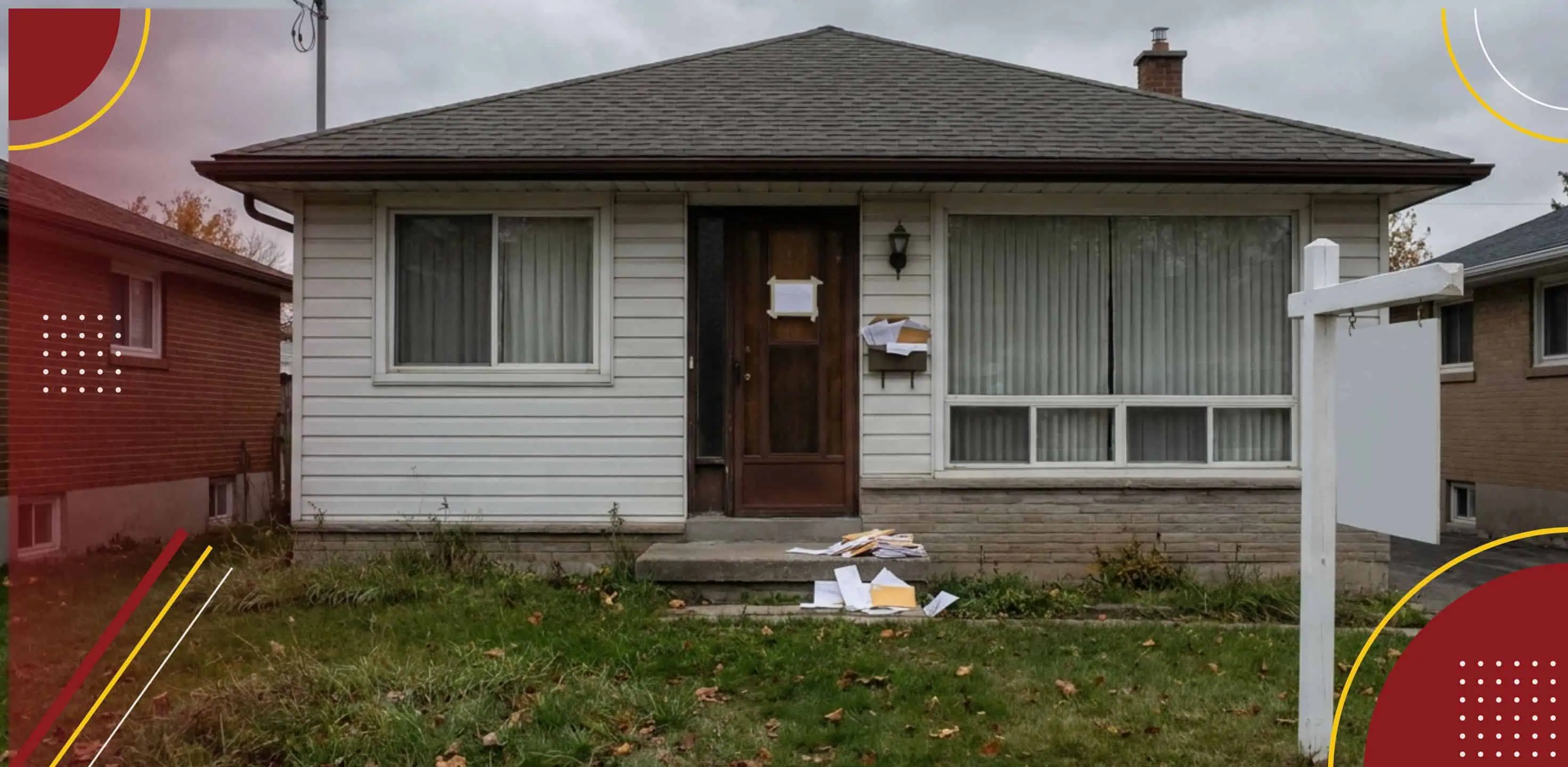
A power of sale in Ontario lets your lender sell your home without going to court if you stop paying your mortgage. Under the Mortgages Act, when your mortgage has its own power of sale clause, the lender can send a Notice of Sale once a payment has been in default for at least 15 days, and it must then wait at least 35 more days before it sells. That means the earliest legal sale date is roughly 50 days after a missed payment, and you can stop the process by paying the arrears and the lender's costs before the sale, which can mean before the lender signs a firm deal with a buyer.
The window is short, and homeowners who act in the first few weeks have far more choices than those who wait for the notice to arrive. If you are worried about an upcoming renewal or a payment you cannot make, LendingHub's options for current homeowners include comparing renewal rates from your current bank and other lenders, plus refinancing, which can help before arrears build up.
This guide explains how the process works step by step, what the law says about your rights, how the sale money is split, and what you can still do to keep your home.
What Is a Power of Sale in Ontario?
A power of sale is a lender's right to sell a mortgaged property when the borrower defaults. In Ontario, it is the out-of-court remedy set out in Parts II to IV of the Mortgages Act. The lender does not need a judge's approval to list and sell the home, as long as it follows the notice rules in the Act.
The right comes from one of two places:
- A power of sale clause in your mortgage: Most mortgage documents spell out what the lender can do on default. If yours contains a power of sale, section 32 of the Act applies: notice after 15 days of default, then at least 35 days before the sale.
- The statutory power of sale: If the mortgage does not contain its own power of sale, the Act gives the lender one. Under sections 24 and 26, the lender can sell only after 3 months of default, and it must give at least 45 days' written notice.
Your standard charge terms (the long document registered with your mortgage) set this out, and a real estate lawyer can confirm it for you.
Mortgage Arrears in Ontario: How Common Is This?
"Mortgage arrears" means you are behind on payments. The Canadian Bankers Association (CBA) counts a mortgage as in arrears once it is three or more months behind.
According to the CBA's May 2026 arrears report, as of May 2026, 6,953 of about 2.15 million bank mortgages in Ontario were in arrears, a rate of 0.32%. The national rate was 0.29%. In October 2026, CMHC put Ontario's arrears rate at 0.32% in Q2 2026 and said it expects the rate to keep rising through mid-2027.
Renewing at a higher rate or losing income can push a household that was managing into arrears within a few months.
The Power of Sale Process in Ontario, Step by Step
Here is how a typical power of sale moves from a missed payment to a closed sale when the mortgage contains its own power of sale clause.
Step 1: You miss a payment
The lender usually contacts you first by phone, email or letter. Late fees and interest on the missed amount start to add up. Nothing legal has happened yet, and this is the best time to talk to the lender.
Step 2: The default continues for 15 days
Under section 32, the lender cannot send a Notice of Sale until the default has continued for at least 15 days.
Step 3: The Notice of Sale under Mortgage arrives
The notice is a prescribed form. Section 33 says it must be delivered by personal service or registered mail. Section 31 requires it to go to everyone with a registered interest in the property, such as a second mortgage lender, plus execution creditors, certain government liens and anyone whose interest the lender has written notice of. If the home is a matrimonial home, the Family Law Act gives your married spouse the same right to redeem and to be served as you have.
Keep the notice and write down the date you received it, because the deadlines run from when it was given.
Step 4: The 35-day redemption period
For at least 35 days after notice, the lender cannot sell. Section 42 also bars the lender from taking other steps to enforce the mortgage during this time, unless a Superior Court judge allows it. This is the period most people use to pay the arrears, refinance or sell.
Step 5: The lender takes possession
To sell, the lender needs the home empty. If the owner does not leave, the lender can start a court action for possession in the Ontario Superior Court of Justice. If it wins, a writ of possession is enforced by the sheriff.
Step 6: The lender lists and sells the home
The lender appoints a real estate agent, lists the property and accepts an offer. The buyer closes with the lender, not with you.
Step 7: The sale money is paid out
Section 27 of the Act sets the order in which the proceeds are paid. Any money left over goes to you (more on this below).
Power of Sale Timeline in Ontario at a Glance
This table shows the legal minimums. Real files often take longer, because getting possession, listing the home and closing a sale all take time.
| Stage | Contractual power of sale (s.32) | Statutory power of sale (ss.24 and 26) |
|---|---|---|
| Earliest the lender can send notice | After 15 days of default | After 15 days of default |
| Minimum notice period before sale | 35 days | 45 days |
| When the right to sell arises | When the notice period ends | Only after 3 months of default and 45 days' notice |
| Earliest possible sale date | About 50 days after the first default | About 3 months after the first default |
| Can you stop it by paying arrears and costs? | Yes, any time before the sale (s.22) | Yes, any time before the sale (s.22) |
Source: Mortgages Act, R.S.O. 1990, c. M.40, checked November 2026.
Your Rights During a Power of Sale
1. The right to pay the arrears and stop the sale
Section 22 says that, despite anything in the mortgage, you can stop the process by paying the amount actually in default plus the lender's necessary expenses. You do not have to pay amounts that became due only because the lender demanded the full balance early. You can do this any time before the sale. Your chance to redeem may end once the lender signs a firm agreement of purchase and sale with a buyer, which comes before the closing day, so ask a lawyer about your exact deadline.
2. The right to a written statement of what you owe
Under section 22, you can ask the lender in writing for a statement of the arrears and costs. The lender must answer within 15 days. Ask for it right away, so you know the exact number you need to raise.
3 The right to the surplus
If the home sells for more than what is owed, the balance belongs to you, not the lender.
4. The right to a remedy if the rules are broken
Section 36 says anyone damaged by an improper sale has a remedy against the party that sold the home. The buyer's title is normally protected, so the remedy is usually money, not undoing the sale. If you think the lender did not follow the Act, speak to a lawyer quickly.
5. Rights for tenants in the home
If the property is rented out, the tenants keep their rights. Part V of the Act treats a lender in possession as the landlord, and it can only remove a tenant through the Residential Tenancies Act, 2006. For a single family home, section 53 allows a tenancy to end on at least 60 days' notice when the buyer gives a written undertaking that they or their spouse, child or parent will live there. Steps to Justice explains what tenants should do when they get a Notice of Attornment.
Where the Money Goes After a Power of Sale
Section 27 sets the payout order:
- Expenses of the sale
- Interest and costs owed to the lender
- The mortgage principal
- Later mortgages and other registered claims, in order of priority
- Any tenant rent deposits that must be repaid
- Whatever is left, which goes to you
An illustrative example
The numbers below are made up to show the math. Your real figures will differ.
| Item | Amount |
|---|---|
| Sale price | $700,000 |
| Sale costs (agent commission, lender's legal fees, other expenses) | $45,000 |
| Arrears, interest and lender costs | $25,000 |
| First mortgage principal | $480,000 |
| Second mortgage balance | $90,000 |
| Left over for the homeowner | $60,000 |
If you had sold the home yourself earlier, you might have avoided some of the lender's legal and enforcement costs, so more of the equity could have stayed with you.
What if the sale does not cover the debt?
A mortgage is also a personal promise to pay. If the sale price falls short of what you owe, the lender may try to recover the difference from you, and CMHC noted in February 2026 that a lender can legally pursue a borrower's other assets, not only the home. Ask a lawyer how this applies to your mortgage.
Power of Sale vs Foreclosure in Ontario
People often use the two words to mean the same thing, but in Ontario they are different legal processes.
| Power of sale | Foreclosure | |
|---|---|---|
| Court involved? | No, the lender follows the Mortgages Act notice rules | Yes, a court action in the Superior Court of Justice |
| What happens to ownership | The lender sells the home to a buyer | A final order ends your right to redeem, so you lose your ownership interest |
| Surplus | Paid out in the s.27 order, with the rest to you | No s.27 payout, because there is no sale and the lender keeps the property |
| Time to redeem | Until the sale (minimum 35 or 45 days of notice) | 60 days from the taking of the account, if you ask to redeem |
Sources: Mortgages Act and Rules of Civil Procedure Form 14B, checked November 2026.
Because foreclosure ends your interest in the property, it can be harsher for an owner with equity. Talk to a lawyer if you receive court papers asking for foreclosure.
How to Stop a Power of Sale in Ontario
These are the main ways homeowners keep or protect their equity. The right one depends on your equity and how much time is left. A licensed brokerage such as the team at LendingHub can compare banks, alternative lenders and private lenders for the refinance options below.
1. Talk to your lender before the notice
The Financial Consumer Agency of Canada (FCAC) tells borrowers to contact their bank as soon as they can. Depending on your situation, a bank may extend your amortization to lower payments, waive certain fees or prepayment penalties, or agree that you miss some payments. FCAC adds that if the bank agrees you can miss a payment as part of a relief plan, it is expected not to report that payment as missed to the credit bureaus. It also warns that a longer amortization means paying more interest overall.
Under the federal Canadian Mortgage Charter, announced in November 2023, federally regulated lenders are expected to offer relief to homeowners at risk, such as a temporary amortization extension, no interest charged on interest during negative amortization and no prepayment penalty when an at-risk homeowner sells the home. These measures apply to federally regulated institutions like the big banks and to your principal residence.
If you missed only one payment, our guide to handling a missed mortgage payment covers the first calls to make.
2. Pay the arrears and costs
If you can raise the arrears from savings, family help or a short-term loan, paying them stops the sale under section 22. Get the lender's written statement first so the number is exact.
3. Refinance with another lender
Refinancing replaces your current mortgage with a new one. If you have enough equity, a new loan can pay out the defaulted mortgage in full, and sometimes other debts too. LendingHub's page on how to refinance your mortgage explains that you typically need at least 20% equity, that you can borrow up to 80% of the appraised value, and that the process typically takes 5 to 10 business days once you apply. Missed payments make a bank approval harder, so this works best early in the process.
If a bank says no, private mortgage lenders in Ontario may consider borrowers with credit challenges and look more at the equity in the home. Their rates are typically higher than bank rates, so treat a private loan as short-term and plan your exit before you sign. Our article on getting a mortgage with bad credit in Ontario explains what lenders look at.
4. Consolidate other debts
When credit cards, car loans or lines of credit are what pushed the mortgage into arrears, rolling them into one payment can free up cash flow. Our guide on whether debt consolidation is a smart choice covers the risks of moving unsecured debt onto your home.
5. Sell the home yourself
If keeping the home is not realistic, selling it on your own terms before the lender sells it often protects more of your equity. You control the price and the closing date, and you may avoid some enforcement costs. Tell the lender you have listed the home and share the agreement of purchase and sale once you have one.
6. Get professional advice
A real estate lawyer can review the notice, confirm the deadlines and check that the lender followed the Act. A Licensed Insolvency Trustee can look at your overall debts. A licensed mortgage broker can compare lenders for a refinance or a new mortgage.
What to Do This Week: A Checklist
- Read the notice: Write down the date it was served and the earliest sale date.
- Request the statement: Ask the lender in writing for the exact arrears and costs under section 22.
- Call the lender: Ask which hardship options it offers and get any agreement in writing.
- Pull your documents: Mortgage statement, standard charge terms, property tax bill, income proof and other debts.
- Check your equity: Compare a recent sale price for similar homes nearby with everything you owe.
- Book advice: A lawyer for the legal side and a mortgage broker for refinance options.
- Keep paying what you can: Do not ignore calls or mail, since silence leaves the lender with fewer options too.
How a Power of Sale Affects Your Credit
Missed mortgage payments are reported to the credit bureaus. According to FCAC, information about late or unpaid loans can stay on your credit report for up to 6 years. A lower score makes it harder and more expensive to borrow again, which is another reason to fix arrears before they turn into a sale.
Frequently Asked Questions
1. How long does a power of sale take in Ontario?
The legal minimum is about 50 days from the first default when the mortgage has its own power of sale clause (15 days of default plus 35 days' notice). Under the statutory power, the lender must wait for 3 months of default and give 45 days' notice. In practice, getting possession and closing usually add weeks or months.
2. How many missed payments before a power of sale?
There is no fixed number of payments in the Act. What matters is how long the default has lasted: at least 15 days before a Notice of Sale for a contractual power of sale, and 3 months of default for the statutory power.
3. Can I still sell my house during a power of sale?
Often, yes. Selling the home yourself before the lender signs a firm deal with a buyer, and paying the mortgage out from the proceeds, is a common way to protect your equity. Tell your lender and your lawyer as soon as you list.
4. Do I have to move out during a power of sale?
The lender needs vacant possession to sell. If you do not leave, it can ask the Superior Court for an order and enforce it with a writ of possession. Tenants in the home are protected by the Residential Tenancies Act, 2006.
5. Can the lender charge me extra fees during a power of sale?
The lender can recover its necessary expenses, such as legal costs, along with the arrears. Ask for the written statement under section 22 and have a lawyer review any costs that look high.
6. Is a power of sale public?
The Notice of Sale goes to everyone with a registered interest in the property, and the home is later listed for sale. Homes sold this way are often marketed as "power of sale" properties.
Final Thoughts
The Mortgages Act gives you time to act: at least 15 days of default, at least 35 days of notice and the right to pay the arrears and stop the sale before the lender signs a firm agreement to sell. The earlier you call your lender, ask for a written statement and get advice, the more options you keep, whether that is a payment plan, a refinance or a sale on your own terms.
If you have equity in your home and want to see your refinance or private lending options, you can speak with a licensed LendingHub mortgage agent to compare lenders before your deadline.
This article is general information, not legal or financial advice. Speak with a licensed lawyer and a licensed mortgage professional about your situation.
Talk to our agent today
Get a no-obligation review of your situation, a comparison of lenders and a clear picture of what each option will really cost.
Licensed Ontario mortgage brokerage · Licence #12566
Recent Blogs
View allThe Knowledge Hub
You acknowledge and agree to Lending Hub's Terms of Use and Privacy Policy by submitting your email address. Contact Us for more information. You can unsubscribe at any time.